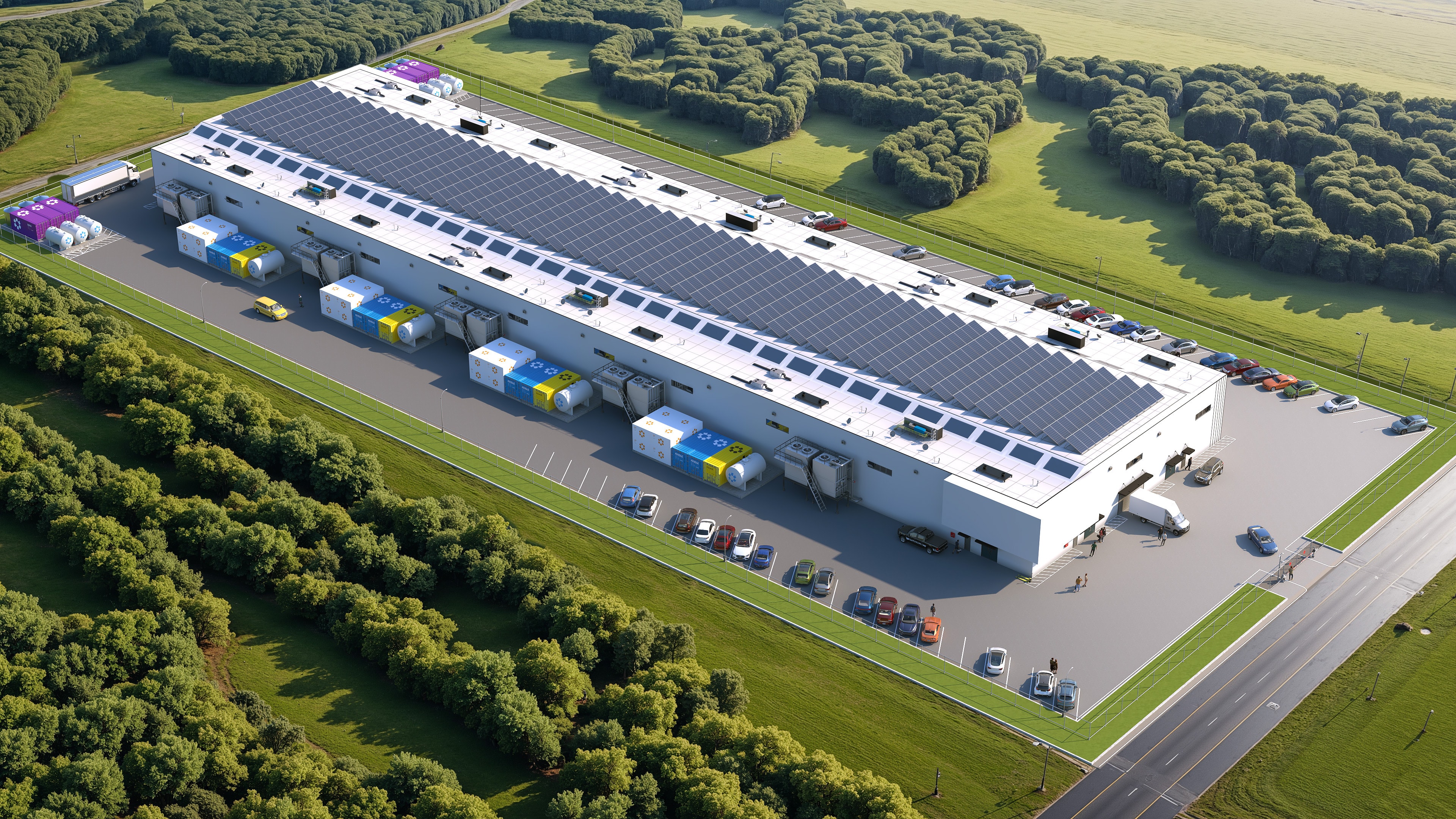
When the digital economy meets the limits of the energy grid
The rapid growth of artificial intelligence, cloud computing and digital services is driving an unprecedented expansion of data center capacity worldwide. As digital infrastructure becomes a fundamental layer of the global economy, energy demand from data centers is increasing at a pace that challenges both the electricity market and grid infrastructure.
Unlike most consumers, data centers require continuous, highly reliable power. Uptime requirements are measured in seconds, not hours. At the same time, the energy system is undergoing a structural transition toward renewable sources such as solar and wind — resources that are inherently variable and often misaligned with constant demand.
This creates a growing mismatch between stable digital infrastructure and variable energy supply.
Several structural dynamics are reinforcing this challenge:
- Electricity demand from data centers is rising rapidly as AI workloads scale
- Power prices are becoming increasingly volatile due to renewable generation patterns
- Grid capacity is tightening in many regions with strong data center growth
- Operators must guarantee uninterrupted operation while controlling energy costs
As a result, energy flexibility is a strategic requirement for future data centers. Facilities that can store energy when it is abundant and inexpensive and use it when demand peaks gain both economic and operational advantages.
Large-scale thermal energy storage offers a particularly promising pathway. By converting electricity into stored heat and delivering energy when needed, such systems can help stabilise power consumption, reduce exposure to volatile electricity markets, and increase the effectiveness of renewable energy.
For the rapidly expanding data centre sector, integrating energy storage is therefore not only a sustainability measure—it is becoming a critical component of resilient and cost-efficient digital infrastructure.