Today, almost all of that heat comes from fossil fuels. Not because it’s sustainable. Not because it’s ideal. But because it’s the only solution that has been reliable enough.
That is the gap Calora is built to close.
The real bottleneck in the energy transition
Solar and wind are growing faster than any energy source in history. They are clean, abundant and increasingly cheap.
But they are variable.
Industry is not.
Heavy industry cannot wait for the sun to shine or the wind to blow. Production lines cannot stop at sunset. Temperatures cannot fluctuate with weather patterns.
Electricity storage has improved — but batteries are not designed for large-scale, continuous high-temperature heat. Hydrogen introduces new complexity, conversion losses and infrastructure demands.
The missing piece is not more electricity.
The missing piece is controllable, stored heat.
What Calora does differently
Calora stores renewable energy directly as heat — not as electricity.
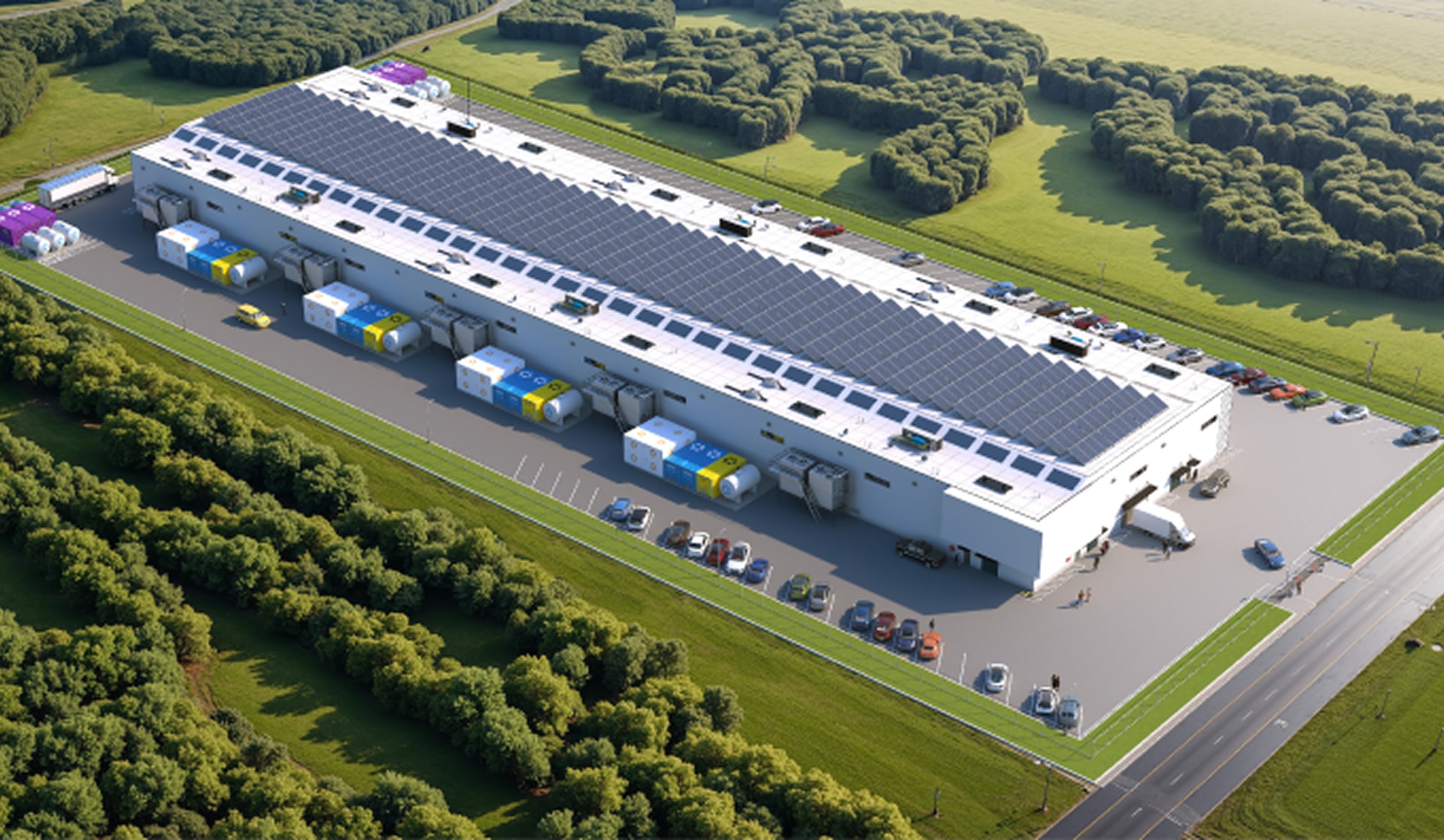
Using high-temperature ceramic storage combined with liquid metal heat transfer, Calora captures surplus renewable energy when it is abundant and inexpensive, and delivers it back as stable industrial process heat when it is needed.
No combustion.
No fuel dependency.
No pressure systems.
No exotic materials.
Just physics — engineered for scale.
Built for real industrial demand
Calora is designed specifically for industries that require:
- High temperatures (up to 2400°C)
- Continuous 24/7 operation
- Process stability
- Integration into existing infrastructure
- Predictable operating costs
The system is modular and scalable. From smaller industrial sites to large steel or cement facilities, capacity grows by adding standardized units — without redesigning the system.
Heat is delivered as steam, hot air or direct process heat, depending on the application.
Lower volatility. Stronger economics.
Electricity prices fluctuate hourly. Gas prices fluctuate geopolitically.
Calora allows industry to:
- Purchase low-cost renewable electricity during surplus periods
- Store it as high-temperature heat
- Decouple operations from peak price volatility
- Reduce long-term energy exposure
This is not only a decarbonization tool.
It is an energy risk management tool.
When emissions drop and energy cost volatility decreases at the same time, the transition becomes economically rational — not ideological.
Cutting emissions before they happen
Carbon capture addresses emissions after fossil fuels are burned.
Calora eliminates the need to burn them in the first place.
Industrial heat accounts for a significant share of global CO₂ emissions. Without solving high-temperature heat, climate targets remain out of reach.
Calora enables industry to replace fossil combustion with stored renewable heat — delivered continuously, without compromise.
A new category of energy infrastructure
Calora is not a battery.
It is not hydrogen.
It is not carbon capture.
It is a new category: high-temperature thermal infrastructure for industry.
By turning variable renewable energy into stable, controllable industrial heat, Calora makes it possible to electrify — and decarbonize — the hardest part of the global economy.