
The global energy transition is often framed as an electricity story. Solar panels spreading across deserts. Offshore wind farms rising from the sea. Batteries stabilizing the grid. Electric vehicles replacing combustion engines.
But this narrative leaves out one of the most stubborn and emission-intensive parts of the global economy: industrial heat.
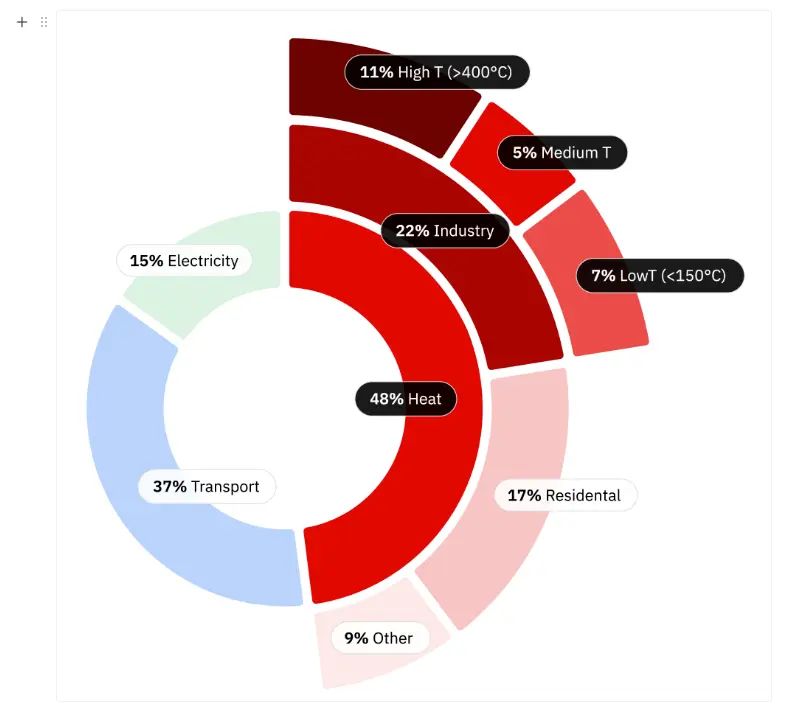
Electricity is only part of the energy system. A significant share of global emissions comes not from powering devices, but from generating extreme temperatures — the kind required to produce steel, cement, chemicals, glass, food and countless other materials that modern society depends on. These processes do not operate at 60 degrees or even 200 degrees. Many require temperatures above 1,000°C. Some exceed 1,500°C. And they must run continuously, day and night, without interruption.
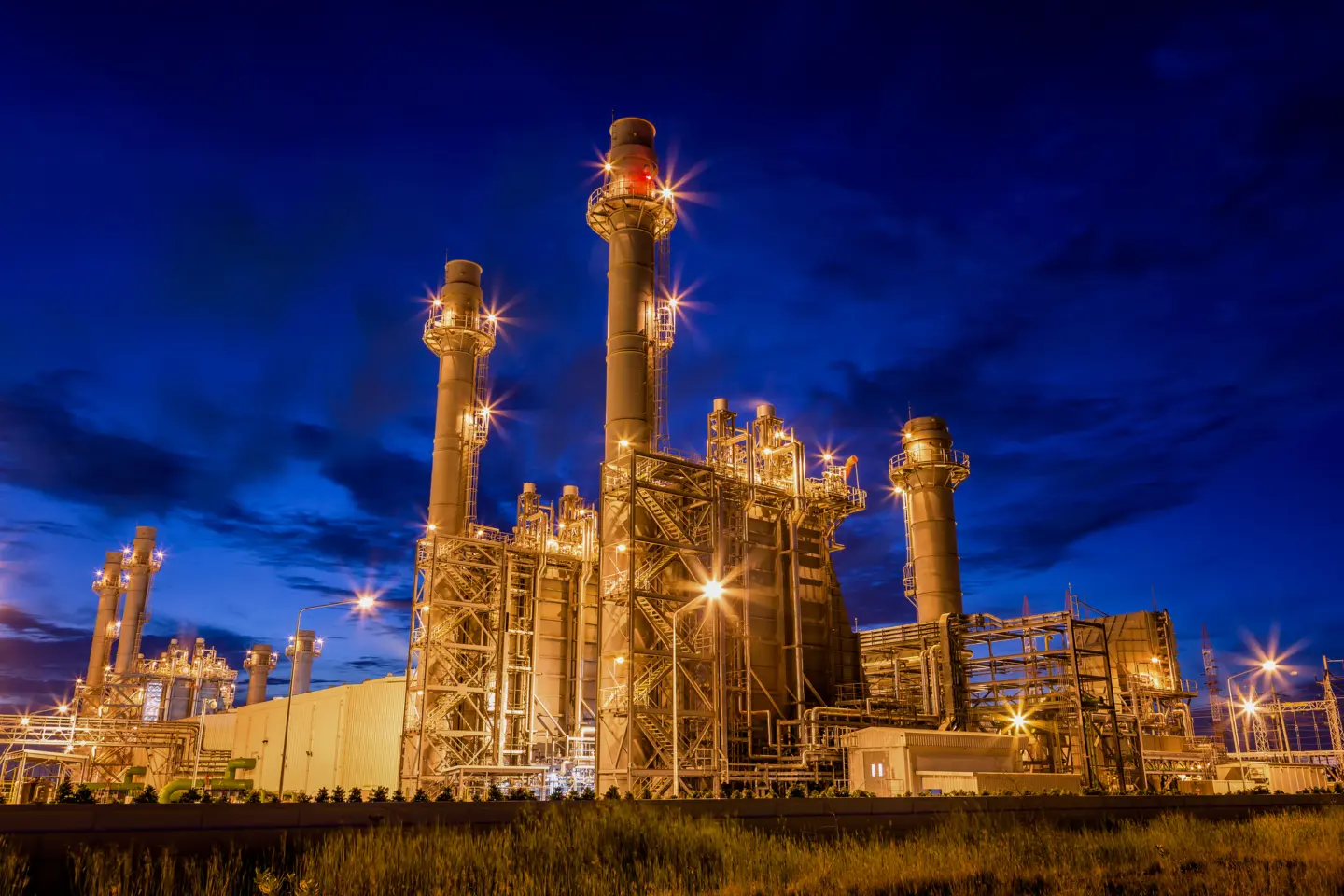
Today, almost all of this heat is produced by burning fossil fuels.
Not because industry is unwilling to change. Not because alternatives are undesirable. But because fossil fuels combine three critical properties: high energy density, controllability and built-in storage. Coal, oil and gas can be transported, stockpiled and ignited on demand. They provide stable, predictable heat at extreme temperatures. For heavy industry, reliability is not optional — it is existential.
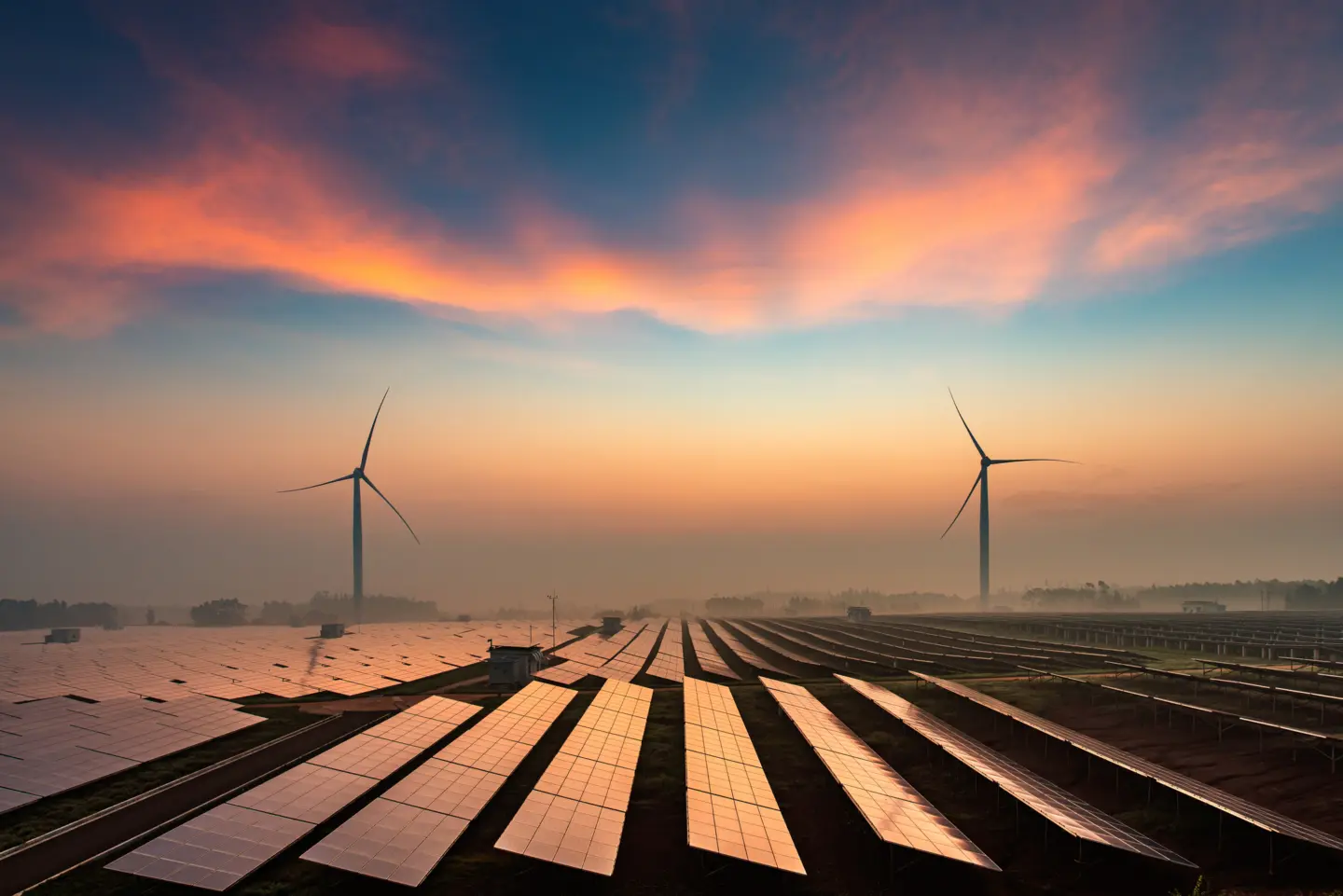
This is the uncomfortable reality: while renewable electricity has scaled rapidly, we have not yet replaced fossil heat at industrial scale.
Solar and wind are now the fastest-growing energy sources in the world. Their costs have fallen dramatically. In many regions, they are the cheapest form of new power generation. That is a remarkable achievement.
But solar panels do not produce energy at night. Wind turbines do not spin on command. Renewable power is variable by nature. For households and offices, this variability can be managed through grids, batteries and demand flexibility. For a steel plant or cement kiln, it is a different equation entirely.
Industrial processes cannot shut down when the sun sets. Restarting large-scale heat systems is slow, costly and sometimes technically impossible without damage. Production lines are designed for constant operation. Stability matters more than peak efficiency.
Batteries, often presented as the universal storage solution, are not designed to solve this challenge. They are optimized for storing electricity over short durations. They become prohibitively expensive when scaled for multi-day, high-energy industrial needs. And crucially, electricity itself is not always the end requirement — many industrial processes need direct high-temperature heat, not electrons.
Hydrogen is frequently proposed as the answer. Yet producing green hydrogen requires vast amounts of renewable electricity, and converting it back into usable heat involves losses, infrastructure complexity and high capital costs. Carbon capture and storage can reduce emissions from fossil processes, but it does not eliminate the dependency on combustion. It adds treatment on top of an existing problem rather than removing the root cause.
What is missing from much of the transition debate is a serious focus on thermal storage at industrial scale.
Fossil fuels are, in essence, stored energy accumulated over millions of years. If renewable sources are to replace them, they must be paired with a form of storage that is equally reliable and economically viable — particularly for heat. Without the ability to capture renewable energy when it is abundant and deliver it as stable, high-temperature heat when needed, heavy industry will remain tied to fossil combustion.
This is not a marginal issue. Steel production alone accounts for a significant share of global CO₂ emissions. Cement contributes a comparable portion. The chemical sector adds further weight. Together, these industries form the backbone of infrastructure, housing, transportation and manufacturing worldwide. There is no credible pathway to net zero that ignores them.
Solving industrial heat is therefore not just a technical challenge; it is a structural prerequisite for climate success.
It is also an economic imperative. As carbon pricing expands and regulatory pressure increases, fossil-based production becomes increasingly exposed to cost volatility and reputational risk. Industrial players are actively seeking solutions that can deliver stable, affordable, low-carbon heat without jeopardizing uptime or competitiveness.
The first scalable system capable of delivering continuous, high-temperature clean heat will not simply reduce emissions. It will reshape industrial energy economics.
The energy transition will not fail because we lack renewable generation capacity. It will fail if we overlook the sectors that cannot run on intermittent power and short-duration storage. It will fail if blast furnaces, kilns and chemical reactors continue to rely on fossil fuels while the rest of the system decarbonizes around them.
Electricity has dominated the conversation. It is time heat takes its place at the center of the debate.
Without solving industrial heat, the transition remains incomplete — and climate goals remain out of reach.